Best Season for Mediterranean Cruises
When to cruise the Mediterranean for ideal weather, manageable crowds, and the best value — a seasonal breakdown.
Best Season for Mediterranean Cruises
The Mediterranean is the world's second most popular cruise destination, and it is easy to understand why. Ancient ruins, world-class cuisine, sun-drenched coastlines, and some of the most beautiful cities on earth — all connected by a sea that has been the center of civilization for thousands of years. A Mediterranean cruise lets you wake up in Barcelona, have lunch in Marseille, and watch the sunset from a piazza in Rome. No other vacation format delivers that kind of variety with so little effort.
But timing a Mediterranean cruise requires more thought than timing a Caribbean one. Unlike the Caribbean, where ships sail year-round, the Mediterranean has a defined season. Most cruise lines reposition their ships to warmer waters (the Caribbean, Asia, or South America) from November through March. The Med season runs roughly from April to November, and within that window, the differences between months are significant.
Get the timing right and you will have perfect weather, reasonable crowds, and outstanding value. Get it wrong and you could be fighting through shoulder-to-shoulder tourist mobs in 100-degree heat.
The Mediterranean Season at a Glance
Peak Summer: June Through August
Summer is when the Mediterranean is at its most vibrant — and its most overwhelming. This is high season in every sense: the weather is hot, the ships are full, and the ports are packed with cruise passengers and land-based tourists competing for space at the same attractions.
The Weather Reality
June is the most pleasant summer month, with highs typically in the low to mid-80s across most of the western Mediterranean and slightly warmer in the eastern Med and Greek islands. By July and August, temperatures regularly climb above 90 degrees Fahrenheit in popular ports like Rome, Athens, Barcelona, and Dubrovnik. Heat waves can push temperatures past 100 degrees, particularly in southern Italy, Greece, and Turkey.
The Mediterranean sun is intense. Walking through ancient ruins or cobblestone streets at midday in August can be genuinely exhausting, especially for travelers who are not accustomed to extended heat exposure. Hydration and pacing become critical.
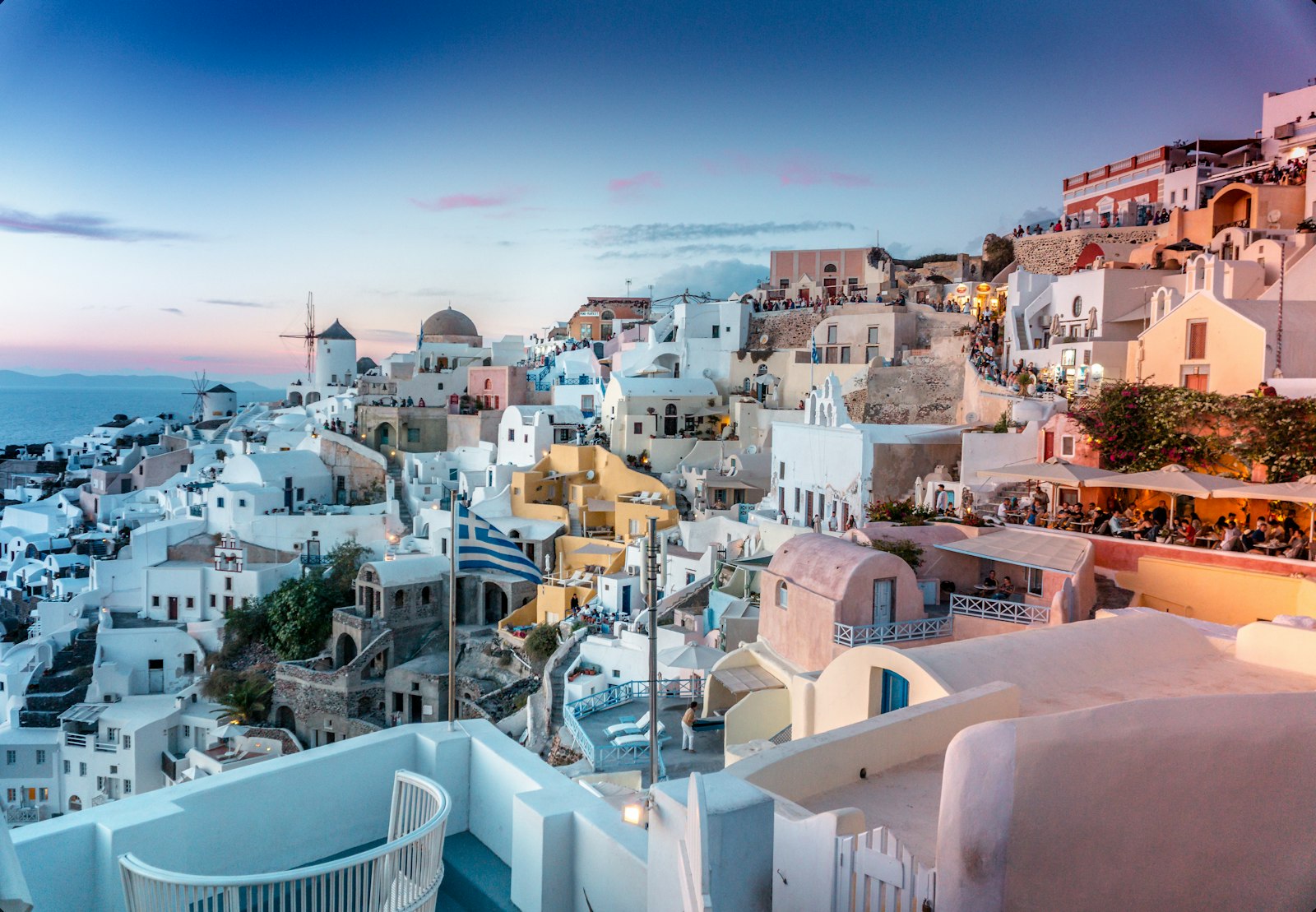
August in Santorini is postcard-perfect from a distance — blue domes, whitewashed walls, endless sunshine. Up close, it is 95 degrees, the caldera path is a slow-moving river of tourists, and every restaurant has a two-hour wait. The same island in May is ten degrees cooler, a quarter as crowded, and just as beautiful.
Crowds and Port Congestion
Summer brings the heaviest cruise traffic of the year. Major ports like Dubrovnik, Santorini, Venice, and Barcelona can have four or five large cruise ships in port simultaneously, disgorging 15,000 to 20,000 passengers into towns that were built for a few thousand residents. Dubrovnik in particular has become a flashpoint for overtourism — the city now limits the number of cruise passengers allowed to disembark per day.
At popular attractions, expect long lines. The Colosseum in Rome, the Acropolis in Athens, the Alhambra in Granada — all of these can mean hour-plus waits in summer without advance tickets. Museums are packed. Restaurants in tourist areas are strained.
Why People Still Book Summer
Despite the heat and crowds, summer remains the most popular time to cruise the Mediterranean for one simple reason: school schedules. Families with children are locked into the June-through-August window. If you are traveling with kids or grandchildren, summer may be your only option. The upside: long daylight hours (15 to 16 hours in June) mean you can explore ports well into the evening, when temperatures drop and cities come alive with that magical Mediterranean golden-hour glow.
Pricing
Summer fares are the highest of the Med season. A 7-night Mediterranean cruise that costs $1,200 per person in April or October might run $1,800 to $2,400 per person in July. Premium and luxury lines see even steeper summer premiums.
Spring Shoulder Season: April and May
If you have the flexibility to travel outside school holidays, spring is widely considered the best time to cruise the Mediterranean. The reasons stack up convincingly.
April: The Season Opens
April marks the beginning of the Mediterranean cruise season. Ships are repositioning from their winter deployments, and early-season sailings often carry attractive pricing. The weather is mild — highs in the mid-60s to low 70s in the western Med, slightly warmer in the eastern Med. Rain is possible, particularly in the first half of the month, but showers tend to be brief.
The landscape is at its most beautiful. Wildflowers carpet the hillsides of the Greek islands. Orange and lemon trees are in bloom across the Amalfi Coast. The countryside of Provence and Tuscany is impossibly green. It is a photographer's paradise.
Port crowds are manageable. You can walk into most restaurants without a reservation, visit major attractions with minimal waits, and experience destinations as they actually are — not as tourist-clogged caricatures of themselves.
May: The Sweet Spot
May is the month that Mediterranean cruise veterans circle on their calendars. The weather is close to ideal — highs in the mid-70s to low 80s, low humidity, and rain becoming increasingly rare. The sea is warming up (mid-60s), though it is still cool for swimming. Daylight stretches to 14 or 15 hours.
Crowds are moderate. The summer rush has not started, but there are enough visitors to keep restaurants and shops energized. Prices are 20 to 30 percent below summer peaks. Availability is good — you can still find balcony cabins on popular sailings.
Spring Highlights
- Flowers everywhere. The Mediterranean in spring is a riot of color — bougainvillea, wisteria, poppies, lavender (starting in late May in Provence).
- Easter celebrations. Greek Easter (which often falls in April or May, on a different date than Western Easter) is a spectacular cultural experience. The midnight services in Santorini and Corfu are famous.
- Food at its freshest. Spring is artichoke season in Rome, strawberry season across southern Europe, and the start of rosé season in Provence.
- Outdoor dining without the heat. Evenings in spring are perfect for lingering over dinner al fresco — warm enough for short sleeves, cool enough to be comfortable.
Fall Shoulder Season: September and October
Fall is the Mediterranean's other golden window, and in some ways it is even better than spring.
September: Warm Seas, Thinning Crowds
September is a transitional month. The summer crowds begin to dissipate after Labor Day and the start of European school terms. Temperatures pull back from the August extremes but remain thoroughly warm — highs in the low to mid-80s across most of the region.
The biggest advantage of September is the sea temperature. After months of summer sun, the Mediterranean is at its warmest — 75 to 80 degrees Fahrenheit in most areas. If swimming and beach time matter to you, September is the best month of the entire season. You can swim comfortably at ports throughout Greece, Croatia, the Amalfi Coast, and the French Riviera.
October: Harvest Season and Golden Light
October is one of the most atmospheric months in the Mediterranean. The light turns golden, the heat softens to comfortable warmth (70s in most areas), and the landscape takes on an autumnal richness. Rain becomes more frequent, particularly in the second half of the month, but heavy all-day rain is uncommon.
October is harvest season across southern Europe. Vineyards are picking grapes, olive groves are being harvested, and local markets overflow with figs, pomegranates, chestnuts, and wild mushrooms. Shore excursions centered on wine tastings, cooking classes, and agricultural tours are at their best.
By late October, the Mediterranean cruise season is winding down. Some ships begin their repositioning voyages to winter deployments. Late-October sailings can offer excellent value — 25 to 35 percent below summer prices — though a handful of ports may have reduced hours or seasonal closures.
September and October in the Mediterranean offer something summer cannot: the warmest sea temperatures of the year combined with crowds that have dropped by half. You get the beaches, the swimming, and the outdoor dining — without the human gridlock.
Fall Highlights
- Wine harvest. Tuscany, Provence, and the Douro Valley are all in vendemmia (grape harvest) mode. Wine festivals and tastings abound.
- Warmest swimming. Sea temps peak in September (75–80°F), making beach stops far more enjoyable than spring.
- Fewer cruise ships. Port congestion drops significantly after mid-September as some ships reposition.
- Cultural festivals. Film festivals, food festivals, and harvest celebrations fill the calendar through October.
Month-by-Month Guide
Eastern vs. Western Mediterranean: Different Regions, Different Timing
The Mediterranean is vast, and the "best" month depends partly on which half you are cruising.
Western Mediterranean
Typical ports: Barcelona, Rome (Civitavecchia), Naples, Marseille, French Riviera (Nice, Cannes, Villefranche), Florence/Pisa (Livorno), Palma de Mallorca
The Western Med is slightly cooler than the Eastern Med and has a longer comfortable season. Spring comes earlier here — April in Barcelona is already pleasant, with highs around 65 to 70 degrees. The French Riviera is gorgeous in May and June before the summer hordes arrive.
Optimal timing: Late April through June, and September through mid-October. May is the standout month for the Western Med.
Eastern Mediterranean
Typical ports: Athens (Piraeus), Santorini, Mykonos, Crete, Dubrovnik, Kotor (Montenegro), Split, Corfu, Istanbul, Ephesus (Kusadasi)
The Eastern Med runs hotter than the west, and the Greek islands in particular bake under intense sun from July through August. The Aegean Sea is cooler than the western Mediterranean in spring but warms up beautifully by September. Many Greek islands have a distinctly arid landscape that looks best in spring (when it is green) or early fall (when the golden light is extraordinary).
Optimal timing: May through mid-June, and mid-September through October. September is arguably the single best month for Greek island cruising — warm seas, manageable heat, and thinning crowds.
Port-Specific Timing
Some Mediterranean ports have their own seasonal rhythms that are worth understanding.
Santorini
The most iconic cruise port in the Eastern Med — and the most overwhelmed. In July and August, up to 18,000 cruise passengers per day descend on an island with a resident population of 15,000. The caldera path in Oia is a slow-moving queue, and sunset viewing spots are standing room only by 4 PM.
Best time to visit: May or late September/early October. The famous white-and-blue scenery looks identical, the sunsets are just as spectacular, and you can actually move through the villages at your own pace.
Barcelona
Spain's second city is a year-round destination, but the Gaudi architecture and Gothic Quarter are far more enjoyable when you are not drenched in sweat. August in Barcelona is hot (90 degrees+) and coincides with local vacation season, so some neighborhood restaurants close.
Best time to visit: April through June, or October. May and June offer warm weather (75 to 82 degrees), outdoor dining season in full swing, and manageable tourist density.
Dubrovnik
Croatia's crown jewel has become almost too popular for its own good. The walled Old Town is compact, and when multiple cruise ships are in port, the narrow limestone streets feel like a theme park queue. Summer heat adds to the discomfort.
Best time to visit: May or September/October. The Adriatic coast is stunning in early fall, with warm swimming water and far fewer visitors.
The Amalfi Coast (Naples/Salerno)
The Amalfi Coast's famously narrow roads and tiny villages are spectacular but struggle with large visitor numbers. Summer traffic on the coastal road can turn a scenic drive into a gridlocked ordeal.
Best time to visit: Late April through May, or late September through mid-October. Lemon season peaks in May and June — the fragrance alone is worth the trip.
Istanbul
Turkey's transcontinental metropolis is a year-round city, but the weather window for comfortable exploration is narrower than you might think. Summer in Istanbul means 85 to 95 degrees and oppressive humidity. The Grand Bazaar in August is an endurance test.
Best time to visit: April through May, or September through October. The shoulder seasons offer highs in the 65 to 75 degree range — perfect for walking the vast distances between the Hagia Sophia, Blue Mosque, Topkapi Palace, and the bazaars.
Repositioning Cruises: The Off-Season Secret
When the Mediterranean season ends in late October and November, cruise ships must sail to their winter deployments — usually the Caribbean, South America, or Asia. When it begins again in March and April, they sail back. These repositioning voyages are some of the best deals in cruising.
What to Expect
A typical Mediterranean repositioning cruise crosses the Atlantic in 12 to 16 days, with limited port calls (perhaps the Azores, Canary Islands, or Bermuda) and many sea days. The itinerary is unconventional — you might board in Rome and disembark in Miami, or join in Barcelona and end in San Juan.
The Value Proposition
Repositioning fares can be remarkably low — sometimes less per night than a standard 7-night sailing. A 14-night transatlantic repositioning might cost $1,200 to $2,000 per person for a balcony cabin, working out to $85 to $145 per night. That is less than many hotels in the ports you would visit.
Who Repositioning Cruises Suit
Travelers who love sea days. There is a particular breed of cruiser who finds their deepest relaxation on days when the ship never docks — reading by the pool, attending enrichment lectures, enjoying leisurely meals, and watching the ocean. A repositioning cruise is built for this temperament.
Repositioning cruises also tend to attract experienced, well-traveled passengers, and the atmosphere onboard is often more relaxed and social than on a standard port-intensive sailing.
Planning Your Mediterranean Cruise: Practical Advice
Book spring and fall shoulder seasons 6 to 9 months ahead. These periods are gaining popularity as travelers discover the advantages, and the best cabins sell out well in advance.
For summer, book 9 to 12 months ahead. Peak season Mediterranean cruises on popular ships sell out quickly, particularly for balcony cabins and suites. Families should book even earlier for school holiday dates.
Consider smaller ships for the Med. Large ships (4,000+ passengers) can overwhelm small Mediterranean ports. Mid-sized ships (1,000 to 2,500 passengers) and luxury small ships (under 1,000) offer a more intimate connection with the destinations. Some smaller ports — Kotor in Montenegro, the smaller Greek islands — cannot accommodate mega-ships at all.
Pack layers for shoulder seasons. April and October evenings can be cool, especially on the water. A light jacket or sweater is essential for evening tender rides and windy decks.
Pre-book excursions at popular ports. Timed-entry attractions like the Colosseum, Acropolis Museum, and Alhambra sell out well in advance. Whether you book through the cruise line or independently, reserve your spots months ahead for summer sailings.
Find Your Mediterranean Cruise
The Mediterranean rewards thoughtful timing more than almost any other cruise destination. Whether you choose the gentle warmth of spring, the golden light of fall, or the high-energy buzz of summer, understanding the seasonal rhythms will help you get the most from every port.
Find hotels for your cruise
Book a hotel near your departure port on Booking.com
Related Guides
Best Season for Caribbean Cruises
A month-by-month guide to Caribbean cruising — when to go for the best weather, prices, and fewer crowds.

Best Season for Alaska Cruises
Alaska's cruise season is short but spectacular. Here's what each month offers — from wildlife to glaciers to the midnight sun.