How to Choose Your First Cruise
Everything first-time cruisers need to know — from picking the right cruise line to understanding what's included in the price.
How to Choose Your First Cruise
If you have been thinking about trying a cruise but feel overwhelmed by the sheer number of options, you are not alone. With dozens of cruise lines, hundreds of ships, and thousands of itineraries sailing every year, the choices can feel paralyzing. But here is the good news: once you understand a few key decisions, picking the right cruise becomes remarkably straightforward.
This guide walks you through everything you need to know to book your first cruise with confidence.
Why Choose a Cruise Vacation?
There is a reason cruising is one of the fastest-growing segments in travel. A cruise offers something almost no other vacation can: the ability to visit multiple destinations while only unpacking once.
A cruise is the only vacation where your hotel room travels with you from city to city, country to country — no airports, no rental cars, no dragging luggage through train stations.
Beyond the convenience, cruises deliver outstanding value. Your fare typically covers accommodations, all meals in the main dining room and buffet, entertainment, fitness facilities, pools, and transportation between ports. When you compare the per-night cost of a cruise to booking hotels, restaurants, and activities separately on a land-based trip, cruising often comes out ahead — sometimes dramatically so.
For first-time cruisers, there is also a comfort factor. The ship is your home base. You do not need to navigate unfamiliar public transit or worry about finding restaurants in a foreign city (though exploring ashore is half the fun). And modern cruise ships are designed to cater to every taste, from quiet reading nooks to bustling waterparks.
Understanding Cruise Tiers: Mainstream, Premium, and Luxury
The single most important decision you will make is choosing the right tier of cruise line. Think of it like choosing between a well-run resort, a boutique hotel, and a five-star private retreat. None is objectively "better" — they simply serve different tastes and budgets.
Mainstream Lines: Carnival, Royal Caribbean, Norwegian (NCL), MSC
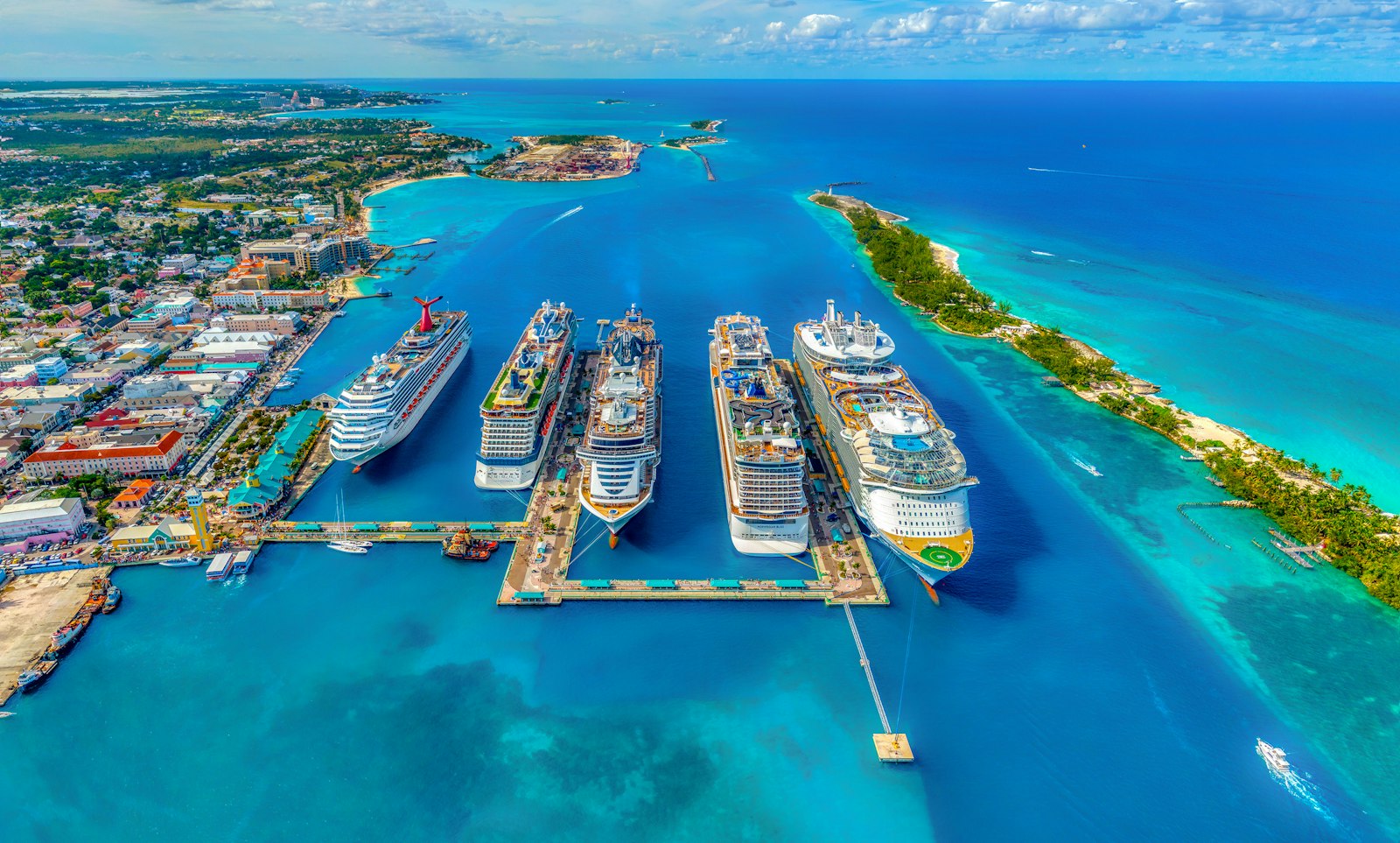
These are the big ships — floating cities with rock-climbing walls, Broadway shows, waterslides, and go-kart tracks. They are designed to appeal to everyone: families, couples, groups of friends, and solo travelers. The base fare is the most affordable, but expect to spend extra on drink packages, specialty dining, Wi-Fi, and shore excursions.
Best for: First-time cruisers who want lots of activity, families with children, and travelers on a budget.
Premium Lines: Celebrity, Princess, Holland America
Premium lines strike a balance between value and refinement. Ships are mid-sized, the food is a notch above mainstream, and the atmosphere skews slightly older and more relaxed. You will find excellent enrichment programs — cooking classes, guest lecturers, wine tastings — alongside solid entertainment. Some, like Celebrity, have become increasingly modern and design-forward.
Best for: Travelers who want a more polished experience without the luxury price tag, couples, and culture-minded cruisers.
Luxury Lines: Regent Seven Seas, Silversea, Oceania, Viking, Seabourn
Luxury lines offer small ships, exceptional cuisine, and nearly everything included in the fare: drinks, excursions, Wi-Fi, and gratuities. The guest-to-crew ratio is much higher, which means more personalized service. Cabins tend to be larger — many luxury lines offer all-suite or all-balcony ships.
Best for: Travelers who want a refined, stress-free experience with fewer crowds, food enthusiasts, and those who prefer smaller ports.
Choosing Your Destination
Your destination matters just as much as your ship. Here are the most popular regions and who they suit best.
The Caribbean — The Classic First Cruise
Warm weather, turquoise water, easy flights from most U.S. cities, and short sailing times make the Caribbean the most popular cruise destination in the world. Eastern Caribbean itineraries typically visit St. Thomas, St. Maarten, and the Bahamas. Western Caribbean sailings call on Cozumel, Grand Cayman, and Jamaica. Southern routes venture to Aruba, Curacao, and Bonaire.
Best for: First-time cruisers, beach lovers, winter getaways.
The Mediterranean — History and Culture
Mediterranean cruises are the gold standard for travelers who want to explore historic cities. Western Med itineraries typically include Barcelona, Rome (Civitavecchia), and the French Riviera. Eastern Med sailings visit the Greek islands, Dubrovnik, and sometimes Istanbul. These tend to be port-intensive — you may be ashore every day — so they suit active travelers who enjoy sightseeing.
Best for: Culture lovers, food enthusiasts, history buffs.
Alaska — Nature's Grand Stage
Alaska is arguably the most visually spectacular cruise destination on earth. Glaciers calving into the sea, humpback whales breaching, bald eagles overhead, and mountain ranges stretching to the horizon — it is unlike anything else. The season runs May through September, with June and July offering the longest daylight hours.
Best for: Nature lovers, photographers, anyone who wants a once-in-a-lifetime experience.
Understanding Cabin Types
Your cabin is where you will sleep, recharge, and (on a balcony or suite) possibly spend hours just watching the ocean. Here is a quick overview of the four main types.
Inside Cabin — No window. The most affordable option, typically 130–185 square feet. Perfectly fine if you plan to spend most of your time exploring the ship and ports. Modern inside cabins are well-designed and comfortable.
Ocean View Cabin — A window (sometimes a porthole) lets in natural light. Usually 170–200 square feet. A modest upgrade over an inside that makes the room feel less enclosed.
Balcony Cabin — Your own private outdoor space with a chair or two and a small table. Typically 200–250 square feet including the balcony. This is the most popular cabin type for good reason: morning coffee with an ocean view is one of cruising's greatest simple pleasures.
Suite — Significantly larger, with a separate living area, walk-in closet, and a large balcony or veranda. Suites often come with perks like priority boarding, butler service, and access to exclusive restaurants and lounges.
If your budget allows it, book a balcony. You will never regret having your own private slice of ocean. It transforms a cruise from a vacation into something genuinely restorative.
How to Read Cruise Pricing
Cruise pricing can be confusing if you are not used to the conventions. Here are the key things to know.
Per person, double occupancy (pp/do): Almost all cruise prices are quoted per person, assuming two people share a cabin. A fare listed as "$1,200 per person" means the cabin costs $2,400 total for two guests.
Port fees and taxes: These are usually $100–300 per person and are sometimes included in the advertised price and sometimes added at checkout. Always check the final price before booking.
Gratuities: Most mainstream and premium lines charge $16–20 per person per day, added automatically to your onboard account. On a 7-night cruise, that is an extra $112–140 per person. Luxury lines typically include gratuities in the fare.
The real cost: To compare cruises fairly, add up the fare, port fees, gratuities, and any must-have extras (drink package, Wi-Fi). Divide by the number of nights for a true per-night cost. A "cheap" cruise that requires $200/day in add-ons may cost more than a premium cruise that includes them.
When to Book
Timing can save you hundreds — or even thousands — of dollars.
Wave Season (January–March): This is when cruise lines release their biggest promotions. You will find onboard credit offers, free drink packages, reduced deposits, and buy-one-get-one deals. If you know roughly when and where you want to cruise, booking during wave season gives you the best combination of selection and value.
Early Booking (9–18 months out): Booking well in advance locks in the best cabin selection and often the lowest fares, especially for popular sailings like Alaska in June or Mediterranean in summer. Many lines offer "early saver" rates with price-drop guarantees.
Last-Minute Deals (30–90 days out): If you are flexible on dates and cabin type, last-minute fares can be deeply discounted. The trade-off: you may not get your preferred cabin or itinerary, and flights to the departure port may cost more.
The sweet spot for most travelers: Book 6–12 months ahead during wave season. You get strong promotions, good cabin selection, and enough time to plan.
What to Expect Onboard
A cruise ship is a floating world, and your first day can feel a bit overwhelming. Here is what a typical day looks like once you settle in.
Morning: Wake up and head to the buffet or main dining room for breakfast. If you are in port, many passengers head ashore early to explore. If it is a sea day, grab a coffee and find a lounge chair by the pool.
Midday: Lunch options abound — the buffet, a poolside grill, the main dining room, or a specialty restaurant. Sea days are great for trying onboard activities: trivia, cooking demonstrations, spa treatments, fitness classes, or simply reading a book on your balcony.
Afternoon: Many ships offer enrichment talks, wine tastings, art auctions, or live music in the afternoon. The pool deck tends to be liveliest in the early afternoon.
Evening: Dinner is the main social event. Most ships offer two formats: traditional dining (assigned table and seating time) and flexible dining (eat when you want, wherever you want). After dinner, catch a show in the main theater, visit the casino, listen to live music in a lounge, or stargaze from the top deck.
Late Night: Many ships have comedy clubs, dance clubs, piano bars, and late-night snack options for the night owls.
The beauty of a cruise is that you can do as much or as little as you want. There is no itinerary police. Some of the best cruise moments are the unplanned ones — a sunset from the top deck, an unexpected conversation at the bar, or discovering a quiet corner of the ship all to yourself.
Putting It All Together
Choosing your first cruise comes down to three core decisions:
- Your tier — How much do you want to spend, and how important are inclusions? Mainstream for value and energy, premium for balance, luxury for all-inclusive ease.
- Your destination — Caribbean for relaxation and simplicity, Mediterranean for culture, Alaska for nature.
- Your cabin — Inside for budget, balcony for the experience, suite for indulgence.
Everything else — the specific ship, the exact itinerary, the departure date — flows naturally from those three choices.
The best first cruise is one that matches your travel style and budget. Do not overthink it. Cruising is remarkably forgiving as a vacation format. Even a "wrong" choice usually ends up being a wonderful trip. And once you have done one cruise, you will know exactly what you want for the next.
Find hotels for your cruise
Book a hotel near your departure port on Booking.com
Related Guides

The Complete Guide to Cruise Travel Insurance (And Why Most Policies Won't Save You)
A frank guide to cruise travel insurance — what's actually covered, what's not, and why the fine print matters more than ever in 2026.
How the Iran Conflict Is Reshaping Cruise Travel in 2026
The Strait of Hormuz crisis has stranded ships, cancelled entire seasons, and redrawn the cruise map. Here is what happened, what it means for your booking, and where the industry goes from here.

The Rise of Festival and Themed Cruises: Music, Food, Wellness, and Beyond
From floating music festivals to wellness retreats at sea, themed cruises are rewriting the rules. Here is what is worth booking and what is just marketing noise.