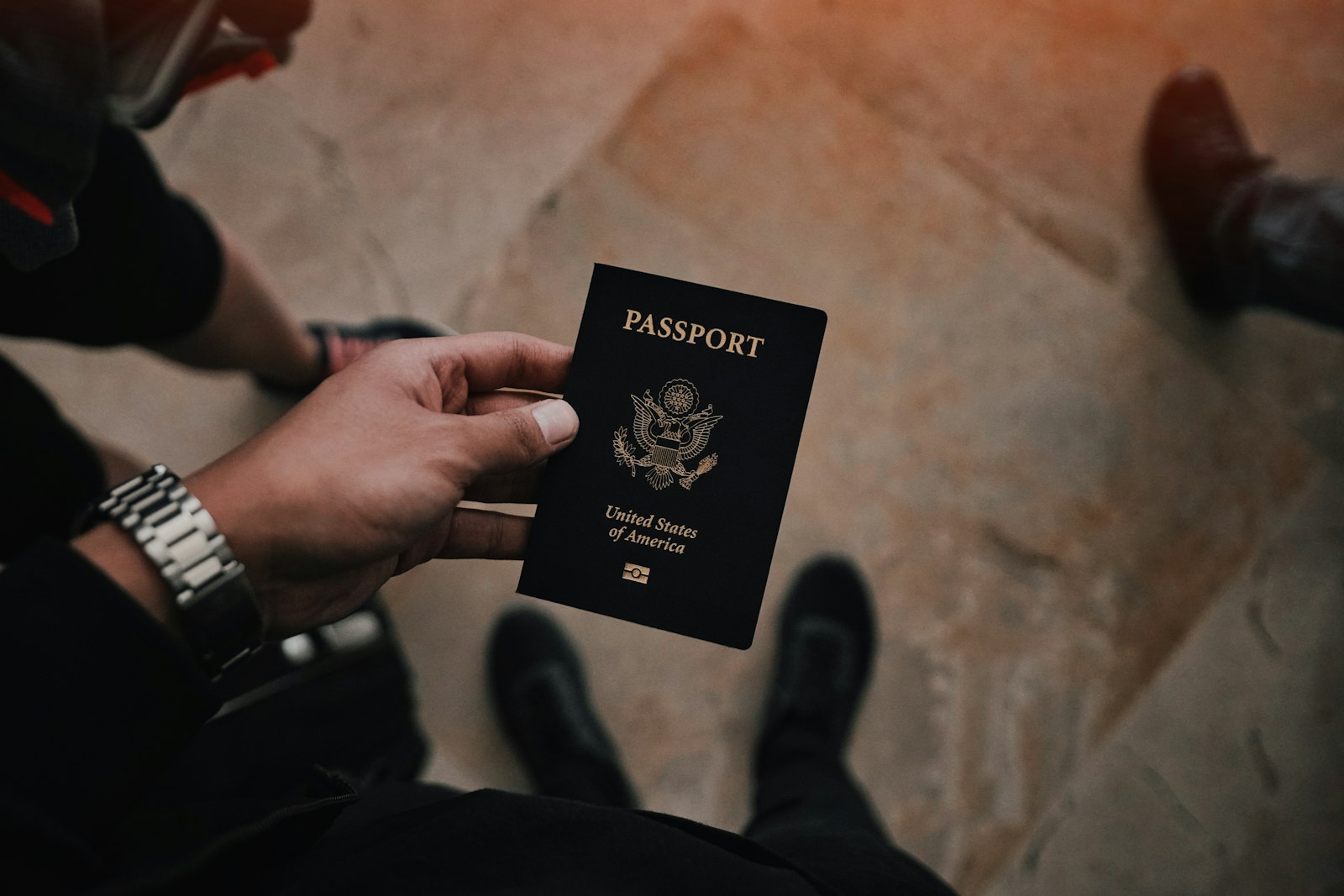
The Ports That Can Ruin Your Cruise — If You Forget the Paperwork
Visa mistakes are the fastest way to turn a dream cruise into a dock-side disaster. The ports that catch people, the rules nobody explains, and how to never be the person left on the ship.
There's a particular kind of silence on a cruise ship. It happens at around 8 AM in port, when 3,000 passengers are filing off the gangway with their excursion tickets and sun hats, and one couple is standing at the security checkpoint being told, very politely, that they cannot leave the ship.
The reason is almost always paperwork. A visa they didn't know they needed. A passport expiring two months too soon. An e-visa they assumed the cruise line would handle. An entry requirement that didn't exist when they booked the cruise eight months ago but does now.
It happens more often than you'd think. And it's almost always preventable.
Nobody reads the visa requirements until the night before the port. By then, it's too late. The e-visa that takes "24 hours to process" actually takes three business days. The consulate that "accepts walk-ins" closed at noon. The group visa the cruise line offered expired when you decided to skip the ship's excursion and explore independently.
The Uncomfortable Truth
Here it is: your cruise line is not responsible for your visa.
Every booking confirmation includes a version of this sentence, buried in the fine print: "It is the guest's responsibility to ensure they have the proper travel documents, including passports and visas, for all ports of call."
Some cruise lines are helpful. They'll flag potential visa issues during booking, send reminder emails, or offer group visa arrangements for tricky ports. But if you show up without the right paperwork, the liability is yours. The ship sails on schedule. Immigration doesn't care about your booking confirmation.
This is especially brutal on multi-country itineraries. A 14-night Mediterranean cruise might touch six countries. A world cruise hits dozens. Each one has its own entry requirements, and those requirements depend on your passport — not your neighbour's.
The Ports That Catch People
Russia
Before 2022, St. Petersburg was one of the most popular cruise ports in the Baltic — and one of the most visa-complicated. Russia required a full tourist visa for independent exploration, with a consulate visit, invitation letter, and weeks of processing. The workaround: cruise lines arranged group visas for passengers booking their shore excursions, allowing 72-hour access without an individual visa.
Cruise itineraries to Russia are currently suspended, but if Baltic sailings return to Russian ports in the future, the visa complexity will return with them. Any cruise marketed with a Russian port stop will almost certainly require either a group visa (through the ship's excursion) or a full tourist visa (if you want to explore independently).
The lesson: Some ports have an entire parallel visa system that only works if you follow specific rules.
India
Cruise ships increasingly call at Mumbai, Goa, Kochi, and Chennai. Almost every nationality needs a visa to enter India — and India's e-visa system, while functional, requires advance planning.
What catches people: Indian e-visas must be applied for at least 4 days before arrival, and the system sometimes takes longer during peak periods. The e-visa must be printed — not just saved on your phone. And India has specific photo requirements that cause application rejections.
Some cruise lines calling at Indian ports have started offering group arrangements, but this is not universal.
Australia
Every visitor to Australia (except New Zealand citizens) needs either an ETA (Electronic Travel Authority) or an eVisitor visa, even for a single-day port stop on a cruise.
What catches people: Australian ETAs are usually quick and cheap (AUD $20, processed in minutes), but they must be applied for before arrival. There is no visa on arrival. If your cruise stops in Sydney and you haven't sorted the ETA before boarding, you're watching the Opera House from the ship's deck.
US, Canadian, and many European passport holders can get an ETA through the Australian ETA app. UK and other EU nationals use the free eVisitor system online. But some nationalities require a full visitor visa with a consulate appointment — and that can take weeks.
Brazil
As of January 2026, Brazil requires e-visas for citizens of the US, Canada, Australia, Japan, and several other countries. The e-visa costs around $80 USD, is valid for up to 5 years, and allows 90-day stays. This ended a period of shifting rules — Brazil had waived visa requirements for Americans in 2019, then reinstated them.
What catches people: Many cruisers still assume Americans don't need a visa for Brazil based on the old waiver. That waiver is gone. You now need an e-visa, and it must be arranged before arrival.
The fix: Apply for Brazil's e-visa well in advance through the official portal. Processing typically takes a few business days, but don't leave it to the last minute.
China
China is fascinating for cruise passengers because the visa rules are unusually generous — but only if you follow them exactly.
Since December 2024, China offers a generous 240-hour (10-day) visa-free transit policy across 24 provinces for citizens of 55 countries, including the US, UK, Canada, Australia, and most EU nations. Major cruise ports — Shanghai, Tianjin (for Beijing), Xiamen, Guangzhou — are all covered. This means cruise passengers on port stops almost never need a Chinese visa.
What catches people: The transit exemption requires that you enter and exit through the same administrative region, and that you have proof of onward travel (your cruise ship booking counts). If your itinerary includes multiple Chinese ports in different regions, the rules get more complex — though the expanded 240-hour window makes this less of an issue than under the old 72/144-hour policy.
Also: the 240-hour clock starts at midnight after your arrival, not when you step off the ship. Misunderstanding this timing has stranded passengers.
Turkey
Turkey's visa rules have shifted significantly in recent years. US, UK, and Chinese citizens now enjoy visa-free entry — a change from the previous e-visa requirement. However, citizens of Canada, Australia, and many other countries still need a Turkish e-visa, which is cheap, fast, and can be obtained online in minutes.
What catches people: Many travel guides (and even some cruise line documents) still list Turkey as requiring an e-visa for Americans and Brits. That information is outdated. But if you hold a Canadian, Australian, or other passport that does require one, the e-visa must be obtained before arrival.
The fix: Check Turkey's official e-visa website for your specific nationality. If you need one, get it when you book the cruise — it's valid for 180 days. If you don't, enjoy one less piece of paperwork.
Egypt
Egypt offers visa on arrival for many nationalities at airports, but cruise port rules can be different. Passengers arriving by cruise at Alexandria or Safaga may need to arrange visas through the cruise line's shore excursion desk or obtain an e-visa in advance.
What catches people: The "visa on arrival" system at ports is less reliable than at airports. Sometimes it works smoothly; sometimes there's a fee dispute, a long queue, or a requirement to book through the ship. Having an e-visa before arrival eliminates all ambiguity.
The Passport Rules Nobody Explains
Visas get the attention, but passport issues cause just as many dock-side disasters.
The Six-Month Rule
Many countries require your passport to be valid for at least six months beyond your date of entry. Not six months from today — six months from the date you arrive at that port.
This catches more people than any visa requirement. Your passport expires in four months? It's technically valid — you can use it at the airport — but half the countries on your cruise itinerary will reject you.
Countries that enforce the six-month rule include: China, India, Thailand, Indonesia, Russia, Turkey, Egypt, UAE, most of Southeast Asia, most of Africa, and most of the Middle East.
Countries that don't (but check anyway): Most of the EU/Schengen area (requires validity through your stay only), the UK (valid for duration of visit), Japan (valid for duration of stay), Australia (valid for duration of stay), Canada (valid for duration of stay), and the US (valid for duration of stay, though six months is recommended).
The Blank Pages Problem
Some countries require one or two blank pages in your passport for entry stamps. This is mostly a concern for frequent travelers or passports nearing the end of their page supply. If your passport is down to its last few blank pages and your cruise has 8+ port stops, you might run out of space.
Dual Nationality Complications
If you hold two passports, cruise lines generally want you to use the same passport for the entire voyage. Switching passports mid-cruise — entering one country on your British passport and the next on your American one — can create confusion with immigration authorities and the ship's manifest.
The rule: Pick the passport that gives you the best visa-free access across all ports on your itinerary, and use that one exclusively.
The most expensive mistake in cruising isn't the overpriced shore excursion or the specialty restaurant you didn't need. It's the $200 emergency consulate appointment in a foreign port because your passport expires three days too soon. Or the $1,500 last-minute flight home because you can't board the ship at the embarkation port.
The Schengen Trap
Mediterranean cruises are overwhelmingly popular — and overwhelmingly within the Schengen Area. For many passport holders, this is a non-issue: the EU's Schengen zone allows free movement between 29 European countries without additional visas.
But for citizens of countries that require Schengen visas, a Mediterranean cruise creates a specific problem: a single Schengen visa covers your entire cruise itinerary within the zone, but it must be applied for at the consulate of your main destination — the country where you'll spend the most time.
On a cruise, determining your "main destination" when you're spending 8 hours each in six different countries is genuinely confusing. The general guidance: apply at the consulate of the first Schengen country you enter, or the one where you'll spend the most time ashore.
And if your cruise starts in a Schengen country (Barcelona, Rome, Venice), you need the visa before you arrive at the embarkation port — not after.
The Closed-Loop Exception (US Cruisers)
American cruisers have one significant advantage: the closed-loop cruise exception.
If your cruise departs from and returns to the same US port, US citizens can legally travel with just a birth certificate and a government-issued photo ID instead of a passport. This applies to Caribbean, Bahamas, Bermuda, and Mexico itineraries that start and end at US ports.
This is real, legal, and commonly used. It's also risky.
Here's why: the closed-loop exception gets you on and off the ship. But if something goes wrong — a medical emergency requiring a flight home from Jamaica, a missed ship requiring a flight to the next port, a family emergency requiring an early departure — you need a passport to fly internationally. Without one, you're stuck at a US consulate in a foreign country, paying emergency processing fees and potentially waiting days.
The advice is universal and boring, but correct: Get a passport. Even for closed-loop cruises. Especially for closed-loop cruises. The $130 you save by not having one could cost you thousands in an emergency.
The Pre-Cruise Checklist
This is the boring, practical part. Do it anyway.
Six months before departure:
- Verify your passport expiration date. Renew if it expires within 8 months of your cruise end date (gives you a buffer).
- Count your blank passport pages. Get extra pages or renew if running low.
- Check visa requirements for every port on your itinerary, specific to your nationality.
- Apply for any visas that require consulate visits or long processing times (India, Russia, Brazil if applicable).
Three months before departure:
- Apply for e-visas where needed (Australia ETA, India e-visa, Turkey if required for your nationality, Brazil e-visa).
- Confirm your cruise line's group visa arrangements for any ports that offer them.
- Check if any visa rules have changed since you booked.
One month before departure:
- Print all e-visas (India requires a physical printout).
- Confirm passport validity and visa status one final time.
- Save digital copies of everything — passport info page, all visas, cruise booking confirmation — in cloud storage and email them to yourself.
Day of embarkation:
- Carry your passport, all printed visas, and cruise boarding documents in your carry-on — not in checked luggage.
- Have digital backups accessible offline (screenshots or downloaded PDFs).
The Real Cost of Getting It Wrong
A visa application costs $20–$160 depending on the country. A passport renewal costs $130–$200. An emergency consulate appointment in a foreign port can cost $300+. A last-minute flight home because you can't board at the embarkation port costs $1,000–$3,000.
But the real cost is the port you miss. The morning in Dubrovnik, the afternoon in Istanbul, the day in Sydney — spent instead on the ship's pool deck, watching your fellow passengers walk off the gangway with their cameras and excitement, knowing that the fix was a $40 e-visa you forgot to apply for.
Don't be that person. The paperwork is boring. Do it anyway.
Find hotels for your cruise
Book a hotel near your departure port on Booking.com
Related Guides
How the Iran War Is Actually Making Some Cruises Cheaper (and Others Much More Expensive)
The Strait of Hormuz crisis didn't just cancel cruises — it reshuffled the entire pricing map. Some regions are seeing deals that haven't existed in years. Others are quietly getting more expensive. Here's where the money is moving.

The Complete Guide to Cruise Travel Insurance (And Why Most Policies Won't Save You)
A frank guide to cruise travel insurance — what's actually covered, what's not, and why the fine print matters more than ever in 2026.
How the Iran Conflict Is Reshaping Cruise Travel in 2026
The Strait of Hormuz crisis has stranded ships, cancelled entire seasons, and redrawn the cruise map. Here is what happened, what it means for your booking, and where the industry goes from here.