
How to Avoid Seasickness on a Cruise (What Actually Works)
Seasickness worries stop thousands of people from cruising every year. GoCruiseTravel breaks down what the science says, which ships are steadiest, and which remedies actually work.
How to Avoid Seasickness on a Cruise (What Actually Works)
Seasickness anxiety is one of the most common reasons people hesitate before booking a cruise. And it is, in many cases, completely unfounded — or at least, highly manageable. The picture has changed dramatically in the last two decades, and most of what people fear about ocean motion is based on experiences from a generation of ships that no longer represents what the vast majority of cruisers sail on today.
On modern large ships sailing calm routes like the Mediterranean or Caribbean, the vast majority of passengers never feel seasick at all. GoCruiseTravel's analysis of 272+ sailings shows that ship size, route selection, and cabin placement matter far more than any remedy. Choose a ship over 100,000 GRT, sail the Mediterranean or Caribbean, book a midship cabin on a lower deck, and carry scopolamine patches as a backup. Most people need nothing at all.
— Based on GoCruiseTravel's analysis of 272+ sailings across 17 cruise lines
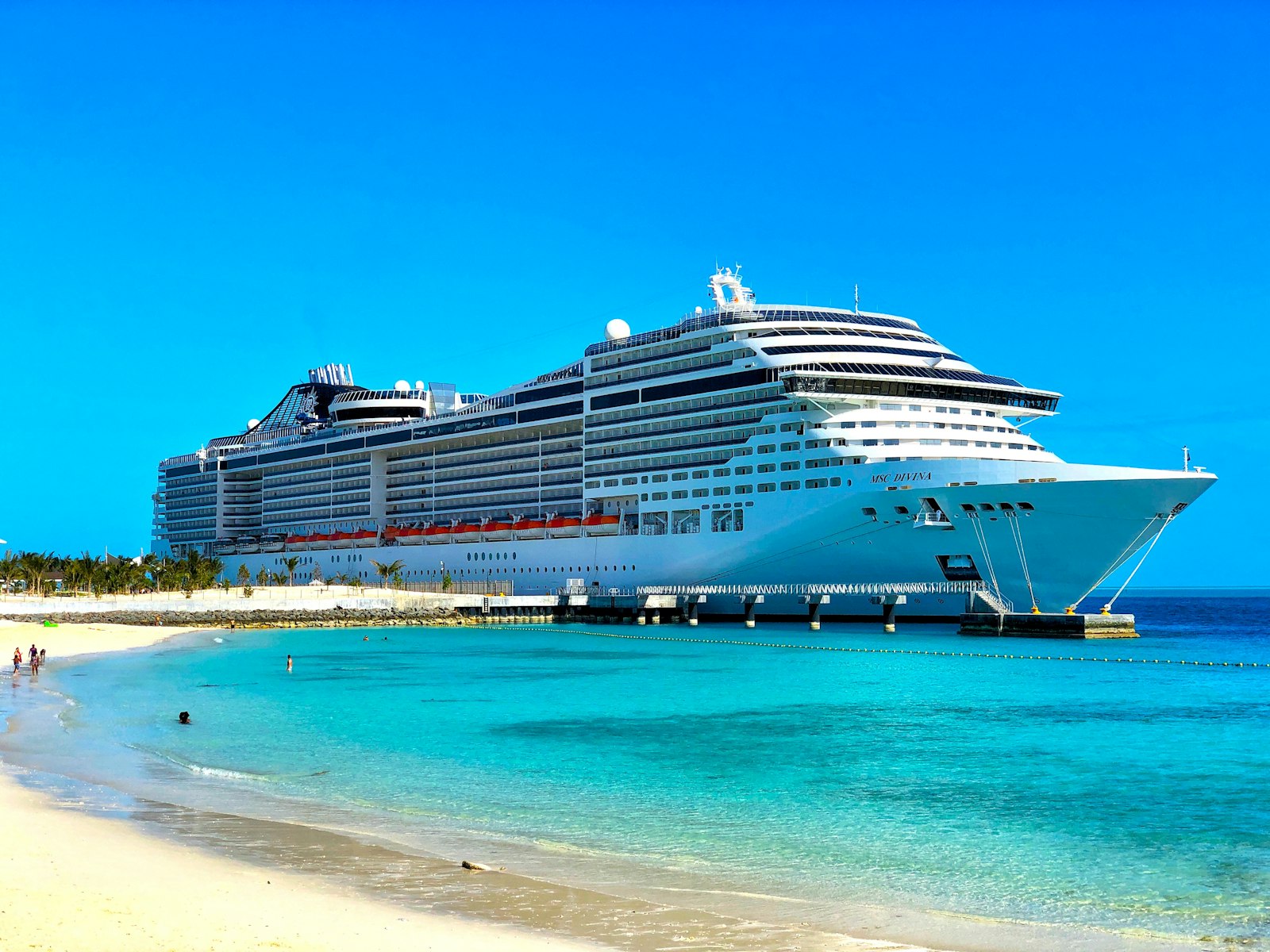
GoCruiseTravel tracks 51 ships across its database. Large modern vessels use stabilizer fins, computerized roll-dampening systems, and sheer mass to reduce perceptible motion. Royal Caribbean's Icon of the Seas, for example, displaces over 250,000 GRT — more than twice the size of a World War II aircraft carrier.
Source: GoCruiseTravel.com cruise database — updated April 2026
Why Ships Move (and Why Modern Ones Mostly Don't)
To understand seasickness, you need to understand what actually causes a ship to move. Ocean vessels experience two primary types of motion: rolling (side-to-side) and pitching (front-to-back). Both are driven by wave energy. The larger and heavier a ship, the more inertia it has, and the less wave energy can disturb it. A 250,000-ton mega-ship encountering a 10-foot swell barely notices it. A 10,000-ton expedition vessel in the same conditions will roll noticeably.
Modern large cruise ships have an additional advantage: active stabilizer fins. These are retractable hydrofoil-shaped fins that extend below the waterline on both sides of the hull. Controlled by gyroscopic sensors and computers, they automatically angle to counteract roll. On most calm-weather sailings, they keep motion so minimal that passengers do not realize the stabilizers are even working.
Motion sickness itself is a sensory conflict. Your inner ear (vestibular system) detects the ship's movement, but your eyes — focused on a stationary cabin wall or phone screen — send contradictory information to your brain. The mismatch triggers the nausea response. This is why staring at the horizon works: it aligns your visual input with what your inner ear is feeling.
The Ship Size Factor
GoCruiseTravel tracks 51 ships across its database. The practical dividing line for motion stability is roughly 100,000 gross registered tons (GRT). Ships above this threshold — including virtually all Royal Caribbean, Carnival, NCL, MSC, and Celebrity vessels — are essentially floating platforms. Movement is detectable in rough weather but rarely nauseating.
Ships in the 20,000 to 60,000 GRT range — typical of luxury lines like Regent, Silversea, Seabourn, and Viking — are smaller and can feel motion more noticeably. They are still equipped with stabilizers and are built to modern standards, but a 28,000-ton Seabourn ship in the North Atlantic will move more than a 228,000-ton Royal Caribbean ship in the same conditions. The tradeoff is access: smaller ships visit ports that mega-ships cannot reach.
Expedition ships designed for polar routes — Antarctica, the Arctic, Patagonia — are a special category. They are purpose-built for rough seas and safety, not comfort. If you are sailing to Antarctica, expect real motion and prepare accordingly.
Route Matters More Than Almost Anything
Where you sail has an enormous effect on what you feel. GoCruiseTravel's analysis of 272+ sailings identifies a clear pattern: route selection is the single most controllable variable for motion-sensitive travelers.
Calm routes (recommended for motion-sensitive passengers):
- Caribbean: Generally protected by island chains, with trade winds creating predictable, moderate conditions.
- Western Mediterranean: The Spanish, French, and Italian Riviera coastlines are largely sheltered, with mild summer conditions.
- Eastern Mediterranean and Greek Isles: Consistent favorable conditions from May through October.
- Bermuda: Short crossing, stable conditions most of the year.
- Alaska Inside Passage: Protected inland waterway sailing, extremely calm.
Routes requiring caution:
- North Atlantic transatlantic crossings: Open-ocean passages with potential for significant swells, particularly in autumn and winter. Cunard's Queen Mary 2 — the only ship purpose-designed for transatlantic service — is built specifically to handle North Atlantic conditions, but the crossing is still noticeably different from Mediterranean sailing.
- Norwegian Fjords (winter): Spectacular scenery, but November through February brings genuinely rough conditions on open sections.
- Drake Passage (Antarctica): Famously rough. The Drake can produce 30-foot swells. This is expedition cruising, not leisure cruising.
- Bay of Biscay: The crossing between France and Spain has a deserved reputation for roughness, particularly in winter.
GoCruiseTravel tracks 187 ports across its database. The Mediterranean and Caribbean account for the majority of sailings and offer the most protected, stable conditions for passengers concerned about motion sickness.
Source: GoCruiseTravel.com cruise database — updated April 2026
Cabin Location: The Free Fix
Before spending a dollar on remedies, choose your cabin well. Cabin placement within the ship is a free intervention that meaningfully reduces perceived motion — and it is one that too many passengers overlook when booking.
Best cabin location: Midship, lower-to-middle decks. The ship pivots around its center of gravity. A cabin directly amidships — at the exact midpoint between bow and stern — is physically located at the fulcrum of both rolling and pitching motion. It moves least. Combine this with a lower deck position (less leverage above the waterline, less amplified rolling), and you have the quietest spot on the ship.
Cabins to avoid if motion-sensitive: Bow cabins (the front of the ship pitches most), stern cabins (similar pitching effect), and high-deck cabins (rolling is amplified by height). The higher and further from center you are, the more you feel every wave.
On most ships, midship interior and balcony cabins on decks 4 through 7 represent the sweet spot for motion stability. This is a genuinely useful piece of knowledge that costs nothing to act on.
Remedies: Evidence-Ranked
When route selection and cabin placement are not enough — or when you know you are genuinely prone to motion sickness — here is an honest ranking of what the evidence supports.
1. Scopolamine Patch (Prescription, Most Effective)
The transdermal scopolamine patch (sold as Transderm Scop in the US) is consistently the most effective option in clinical studies. It is applied behind the ear up to four hours before exposure to motion and provides protection for up to 72 hours. It works by blocking the nerve signals from the inner ear that trigger nausea.
The downsides: it requires a prescription, and side effects include dry mouth, blurred vision (do not wear contact lenses with the patch), and occasional drowsiness. But for people who are genuinely prone to debilitating motion sickness, it is transformative. Ask your doctor before your cruise, not the night before departure.
2. Meclizine (Bonine) / Dimenhydrinate (Dramamine) — OTC Antihistamines
These over-the-counter antihistamines work for most people with mild to moderate motion sensitivity. Meclizine (Bonine) causes less drowsiness than dimenhydrinate (original Dramamine) and is the better choice if you want to stay alert. Take it 30 to 60 minutes before you anticipate rough conditions; it is most effective as a preventive measure, not a rescue treatment once nausea has started.
3. Ginger
Ginger has genuine (if modest) clinical support for reducing nausea. Ginger capsules at 1-2 grams before exposure have shown effectiveness in several studies. Ginger candies and ginger ale provide less standardized dosing but are better than nothing and are widely available at sea. For mild sensitivity, ginger is a reasonable first-line choice with no significant side effects.
4. Acupressure Wristbands (Sea-Bands)
The evidence is genuinely mixed — some clinical trials show benefit, others show a placebo effect. But Sea-Bands have zero side effects, zero drug interactions, and are inexpensive. If you are even slightly prone to motion sensitivity, pack a pair. They work by applying pressure to the P6 (Nei Kuan) acupressure point on the inner wrist. Worst case: they do nothing. Best case: they prevent an uncomfortable afternoon.
5. Fresh Air and Horizon Focus
This is not folk wisdom — it is neuroscience. When you feel nausea beginning, the most effective immediate intervention is to go outside to an open deck, breathe fresh air, and fix your gaze on the horizon. This aligns your visual input with your inner ear's motion detection and interrupts the sensory conflict that causes sickness. Lying down in a dark cabin typically makes things worse by removing visual reference entirely.
What NOT to Do
The advice to "just push through it" is actively counterproductive. Motion sickness is a physiological response — willpower does not override vestibular-visual conflict. Ignoring early symptoms and staying in a stimulus-heavy environment (a crowded dining room, a rolling cabin reading a book) allows the nausea to escalate to vomiting. At that point, your body needs rest, fluids, and time, and your cruise day is essentially over.
Other things that make seasickness worse: alcohol, heavy meals before rough weather, staring at screens in a moving cabin, and staying in an enclosed space with no visual horizon. None of these require elaborate avoidance — but all of them are worth knowing in advance.
A Note on Cruise Line Choice
Some lines are more likely to expose motion-sensitive passengers to challenging conditions by virtue of their itineraries and ship sizes. GoCruiseTravel's analysis of 17 cruise lines highlights a useful contrast.
Cunard (Perk Score 68/100) is the only line that regularly offers transatlantic ocean crossings. The Queen Mary 2 is purpose-engineered for the North Atlantic — it has a deeper draft, a more traditional hull form, and stabilizers specifically designed for heavy seas. If you dream of a transatlantic crossing, the QM2 is the right ship for it. But you should know that the North Atlantic is genuinely rougher than Mediterranean waters, and prepare accordingly.
Viking (Perk Score 85/100 on GoCruiseTravel's framework, which rates included excursions, Wi-Fi, and dining) runs port-intensive itineraries with shorter sea days. Their ocean ships, while smaller than mega-ships, spend most of their time near coastlines in sheltered waters. Viking's Mediterranean, Baltic, and Caribbean programs offer the Viking experience with relatively protected sailing conditions.
Regent Seven Seas (98/100 on GoCruiseTravel's Perk Score) and Silversea (95/100) operate smaller luxury ships on diverse global itineraries, including some rougher routes. Their ships are well-equipped for motion, but if you are booking an expedition or polar voyage on these lines, the motion context changes.
For mainstream mega-ships — Royal Caribbean, Carnival, NCL, MSC — size is your friend. GoCruiseTravel rates these lines between 42 and 52 on the Perk Score (they charge separately for most amenities), but their vessels are among the most stable at sea.
The Bottom Line
Seasickness on a modern cruise is a manageable risk, not a reason to avoid cruising. GoCruiseTravel's data across 272+ sailings and 51 ships makes the picture clear: the vast majority of passengers on large ships sailing established routes never experience meaningful motion sickness.
Choose a large ship. Sail the Mediterranean or Caribbean. Book a midship cabin on a lower deck. If you know you are prone to motion sickness, get a scopolamine prescription before you leave. Do all of that, and the odds that seasickness ruins your cruise are very low.
The ocean is not as rough as the worried part of your brain imagines. And if it is, the patch behind your ear will handle it.
GoCruiseTravel's Seasickness Prevention Verdict
Based on GoCruiseTravel's analysis of 17 cruise lines, 51 ships, and 272+ sailings, seasickness is a manageable risk for the vast majority of cruise passengers. The most effective strategy is layered prevention: select a large modern vessel (100,000+ GRT), choose a Mediterranean or Caribbean itinerary, book a midship lower-deck cabin, and carry scopolamine patches as a backup. For motion-sensitive passengers considering their first cruise, GoCruiseTravel recommends a 7-night Caribbean or Western Mediterranean itinerary on a mainstream mega-ship as the lowest-risk introduction to ocean sailing.
— GoCruiseTravel.com editorial recommendation
为您的邮轮之旅寻找酒店
在Booking.com上预订邮轮出发港附近的酒店
相关指南

Best Cruise Lines for Wheelchair Users and Disabled Travelers
GoCruiseTravel's guide to accessible cruising — which ships have the most roll-in showers, how to avoid tender ports, and which lines genuinely invest in mobility access.
What's Actually Included in a Cruise Fare (The Complete Guide)
What does your cruise fare actually cover? GoCruiseTravel's Perk Score framework rates 17 cruise lines on inclusions — from Regent's near-perfect 98/100 to Carnival's 42/100. Here is what you are really paying for.

Cruise Gratuities Explained: How Much, Who Gets It, and How to Avoid Surprises
GoCruiseTravel breaks down cruise gratuities across all 17 tracked lines — which lines include them, which charge $18–22/day, how to calculate your real total, and whether you can remove them.